Rapipay
AePS
(Adhaar Enabled Payment System)
AePS
(Adhaar Enabled Payment System)
Making everyday transactions simpler for RapiPay users.
Making everyday transactions simpler for RapiPay users.
Duration: 1 Month
Duration: 1 Month
Team: 1 Designer · 1 PM · Tech
Team: 1 Designer · 1 PM · Tech
Domain: Fintech
Domain: Fintech
I was the sole designer on this project, responsible for end-to-end UX, from ground research and problem framing, through interaction design and iteration, to handoff with the PM and development team. All design decisions documented here are mine.
I was the sole designer on this project, responsible for end-to-end UX, from ground research and problem framing, through interaction design and iteration, to handoff with the PM and development team. All design decisions documented here are mine.
Rapipay
AePS
(Adhaar Enabled Payment System)
Making everyday transactions simpler for RapiPay users.
Duration: 1 Month
Team: 1 Designer · 1 PM · Tech
Domain: Fintech
I was the sole designer on this project, responsible for end-to-end UX, from ground research and problem framing, through interaction design and iteration, to handoff with the PM and development team. All design decisions documented here are mine.
Overview
In Tier-2 and Tier-3 cities, RapiPay agents act as the primary access point to banking services for many customers. Used by 5 lakh+ agents, AEPS enables these agents to perform essential transactions using Aadhaar & biometrics.
In Tier-2 and Tier-3 cities, RapiPay agents act as the primary access point to banking services for many customers. Used by 5 lakh+ agents, AEPS enables these agents to perform essential transactions using Aadhaar & biometrics.
In Tier-2 and Tier-3 cities, RapiPay agents act as the primary access point to banking services for many customers. Used by 5 lakh+ agents, AEPS enables these agents to perform essential transactions using Aadhaar & biometrics.
This project focused on redesigning the AEPS experience to better support agents who perform the same transactions repeatedly, under real-world pressure.
This project focused on redesigning the AEPS experience to better support agents who perform the same transactions repeatedly, under real-world pressure.
Going to where the work actually happens
Going to where the work actually happens
Rather than starting with the product, I started with the agents. I visited and shadowed 5 agents across Noida & Ghaziabad, observing them in their shops, with real customers, during live transactions.
Across sessions, a consistent behavioral pattern emerged that the existing app completely ignored:

Agents almost always started with a balance check, followed by cash withdrawal. Mini statements were situational. Aadhaar Pay was used only in specific cases. But the app treated each service as an isolated feature.
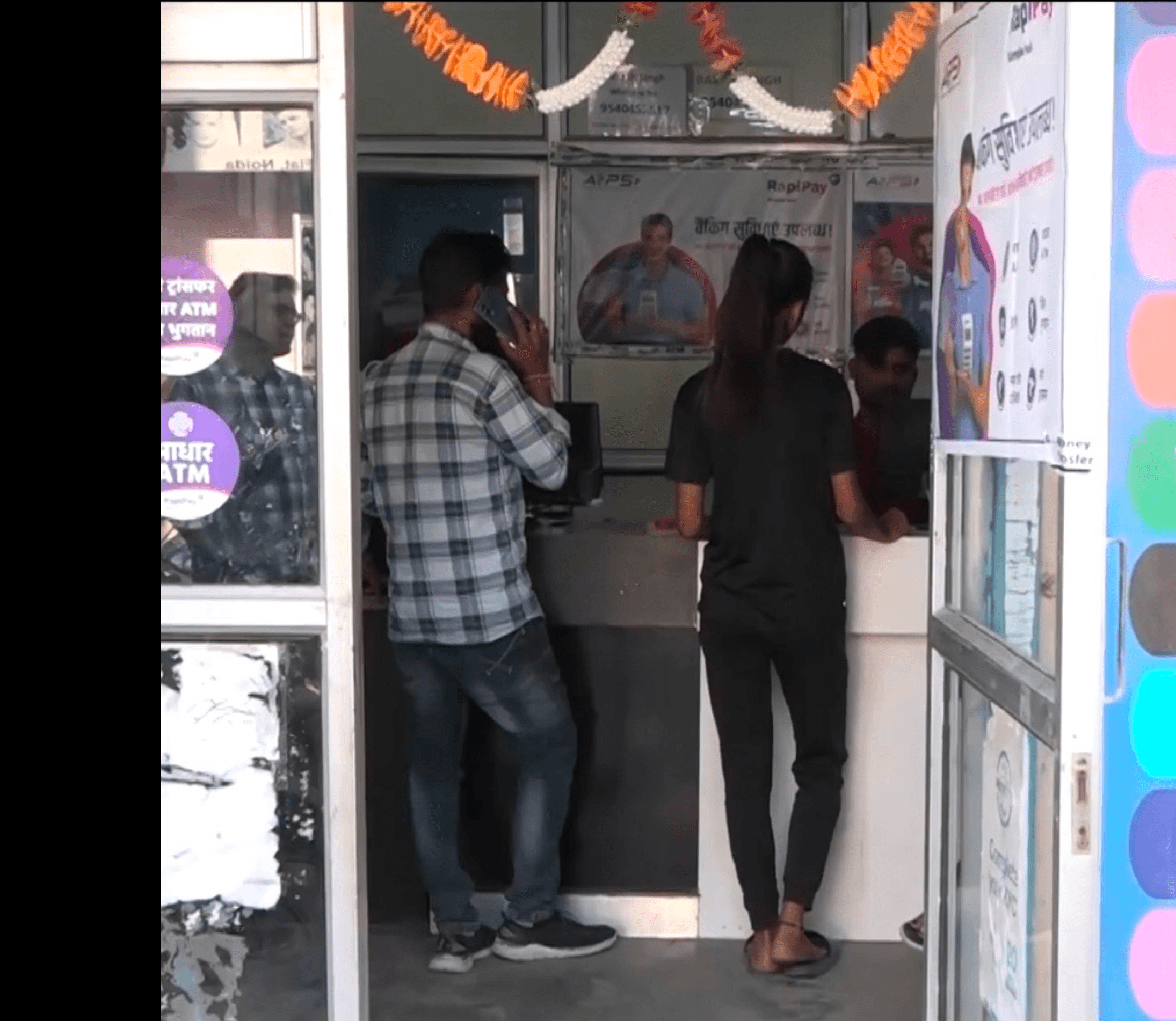
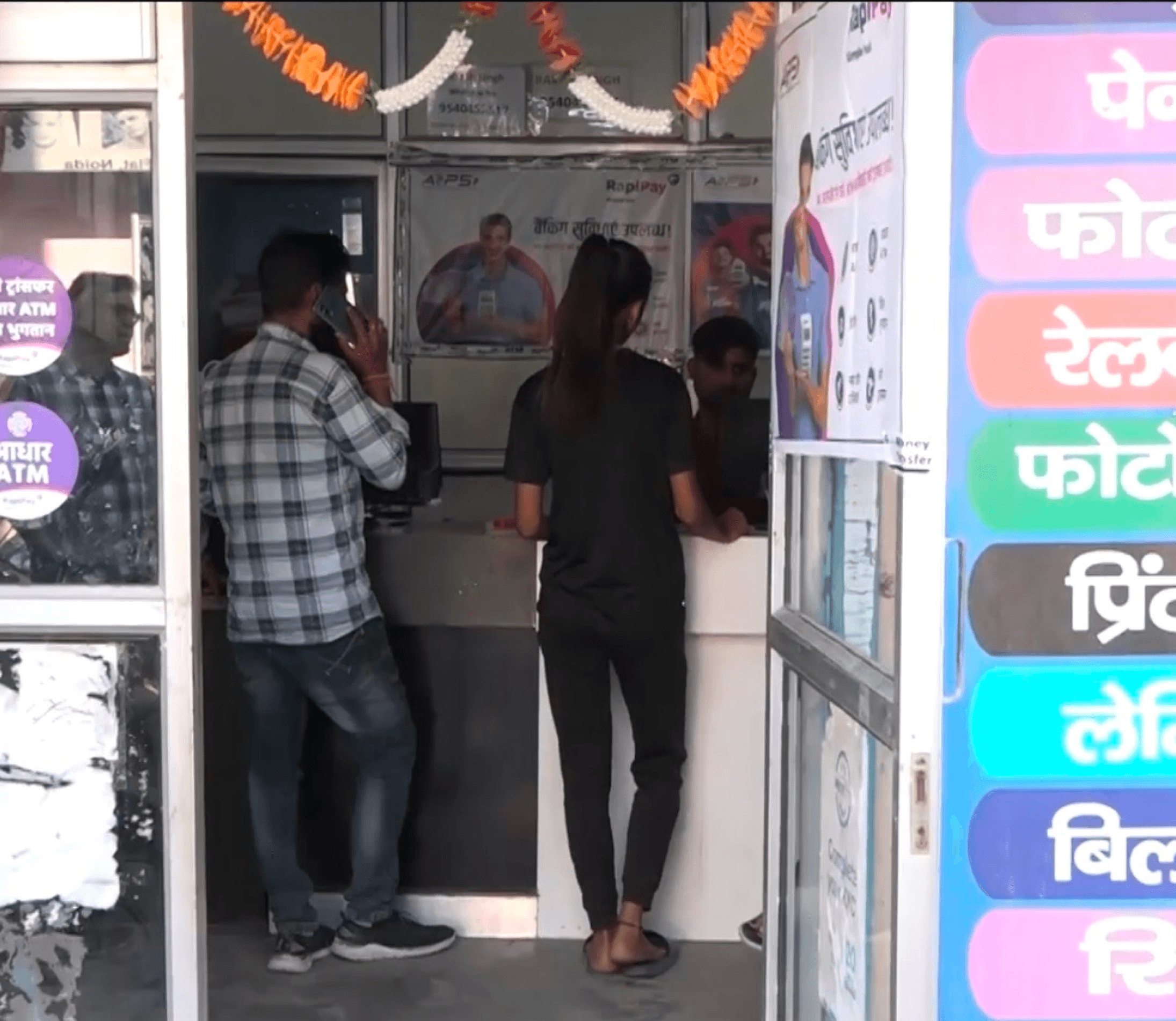
Understanding AEPS Journey
Three key pain points emerged
Three key pain points emerged
Agents had to navigate back to the homepage between every service- balance enquiry, then back, then cash withdrawal, then back. Each round trip broke the flow and visibly disrupted the customer interaction.
Agents had to navigate back to the homepage between every service- balance enquiry, then back, then cash withdrawal, then back. Each round trip broke the flow and visibly disrupted the customer interaction.
Customer details (Aadhaar number, mobile number, bank) had to be re-entered for each service even within the same customer session. This was the single biggest source of friction observed in the field.
Customer details (Aadhaar number, mobile number, bank) had to be re-entered for each service even within the same customer session. This was the single biggest source of friction observed in the field.
Agents frequently left the AEPS flow mid-session to check their wallet balance on the homepage
Agents frequently left the AEPS flow mid-session to check their wallet balance on the homepage
Pain Points
Problem framing
The real issue wasn't discoverability - it was flow
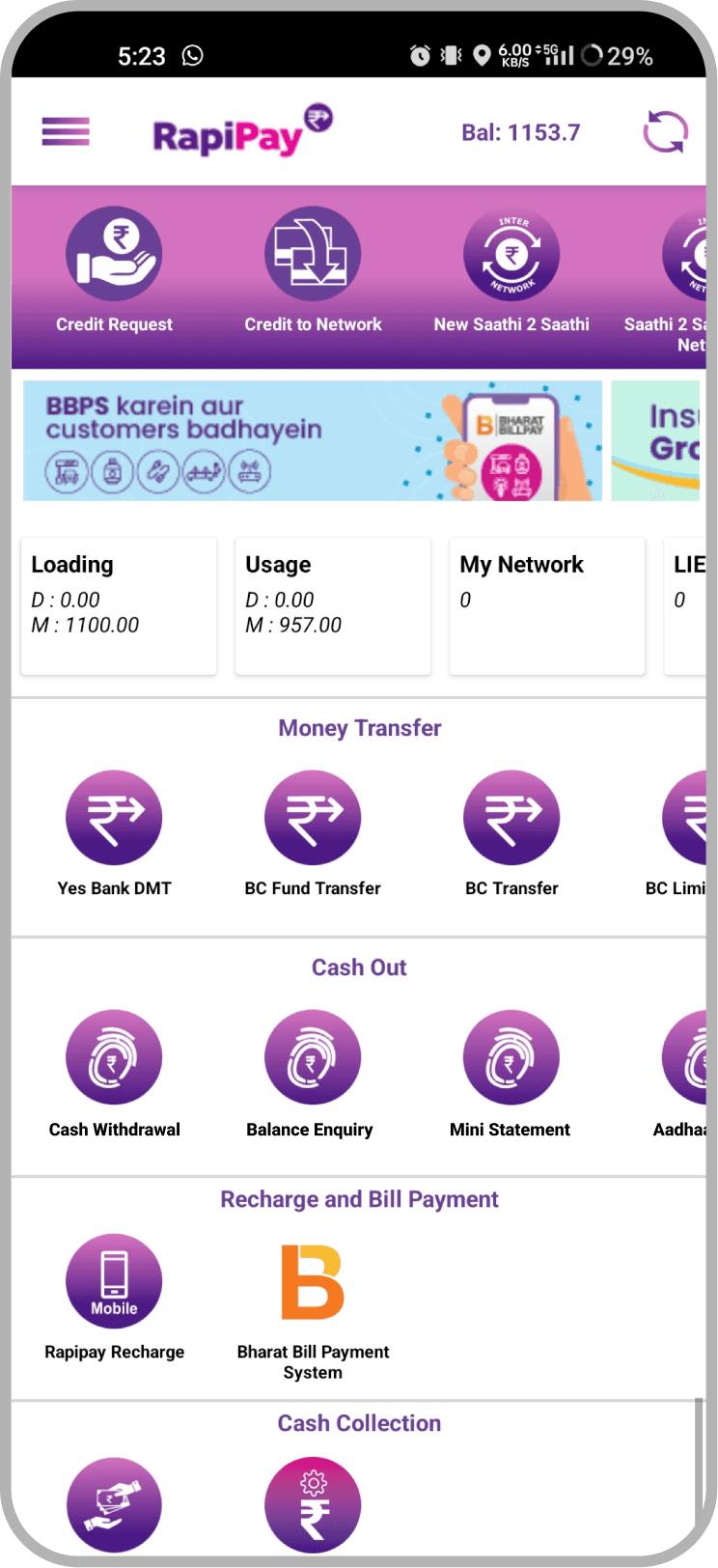
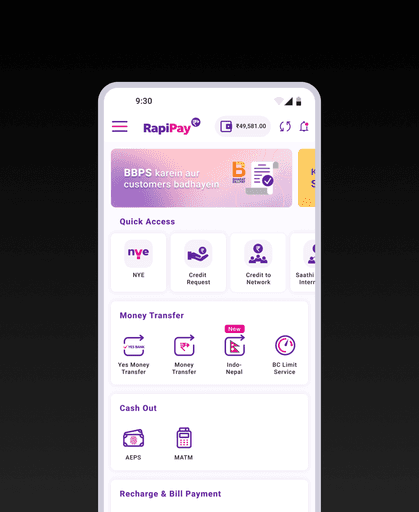
The existing experience scattered all AEPS services as separate tiles on the homepage. This made sense for first-time users exploring the app, but AEPS agents aren't explorers. They're power users executing a known sequence, repeatedly, under observation.
Before:
4 separate entry points on homepage
Navigate back between every service
Re-enter customer details per service
Wallet balance only visible on homepage
No banking trust signals in the flow
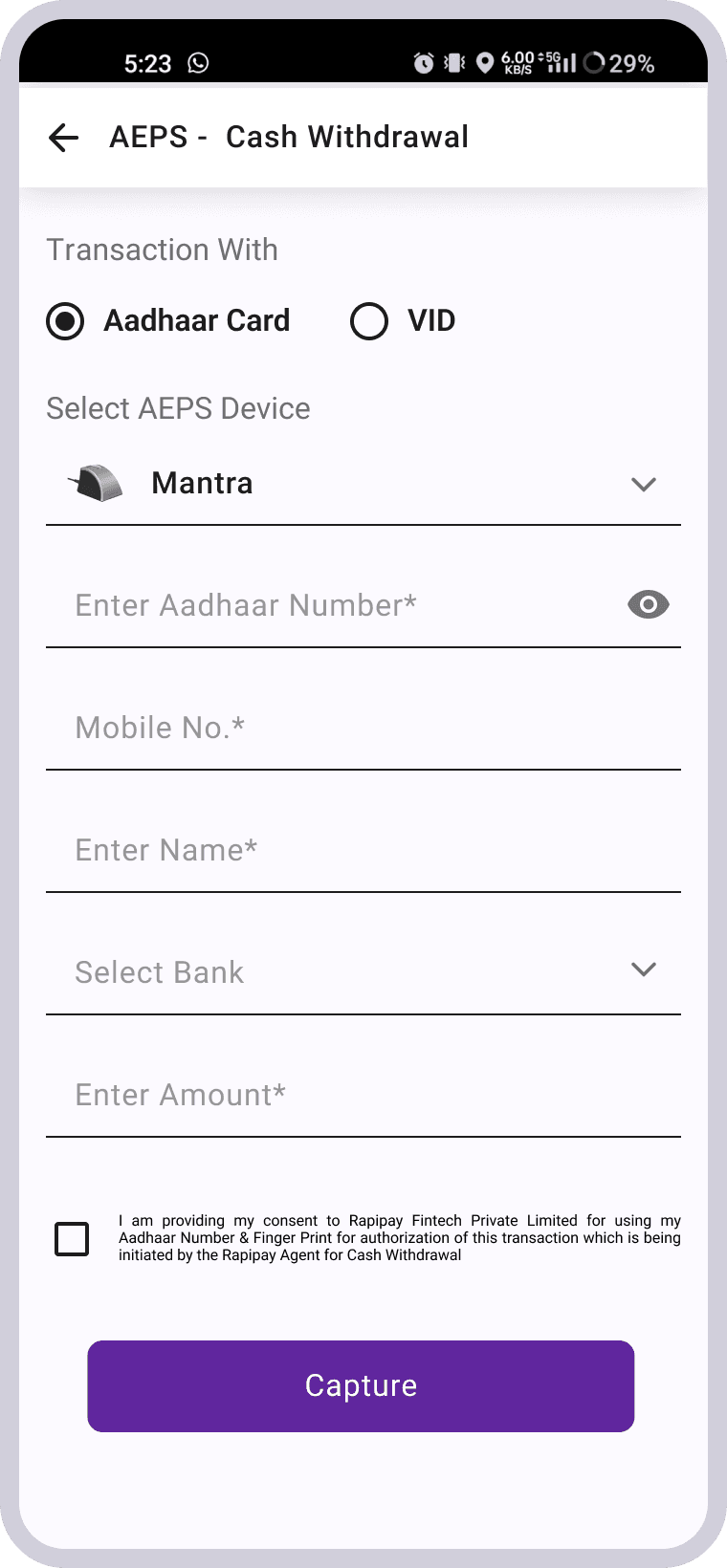
After:
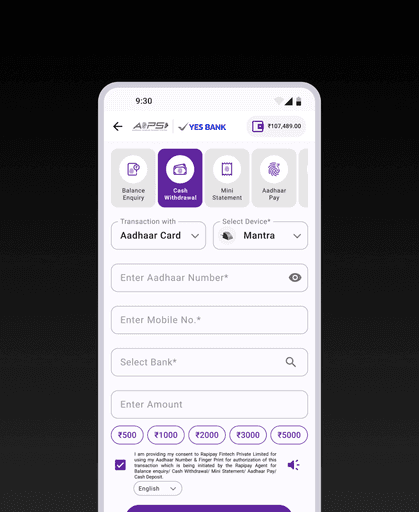
Single consolidated task screen
Tab-based switching within one context
Details persist across service switches
Wallet balance visible upfront in flow
Partner bank logos for compliance and trust
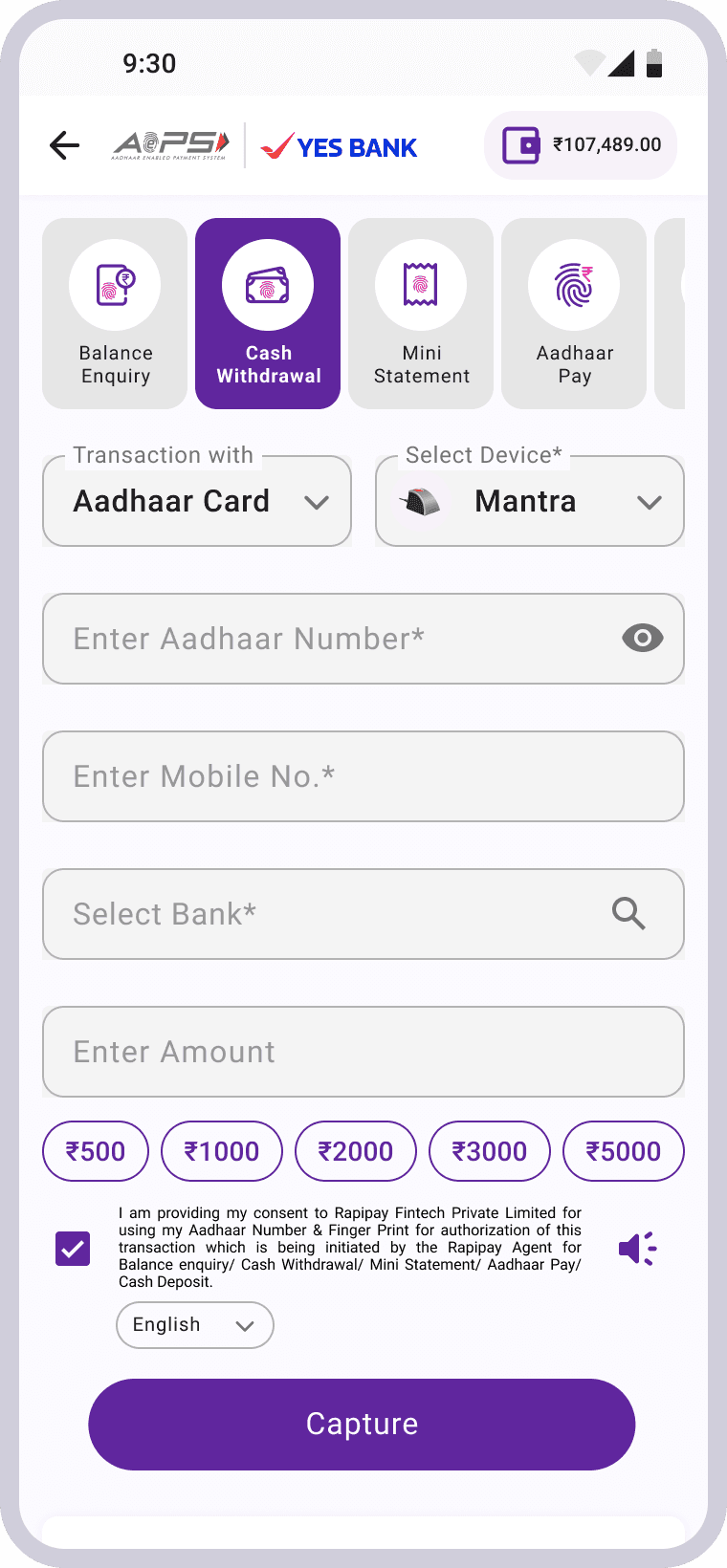
Problem framing
The real issue wasn't discoverability - it was flow
The existing experience scattered all AEPS services as separate tiles on the homepage. This made sense for first-time users exploring the app, but AEPS agents aren't explorers. They're power users executing a known sequence, repeatedly, under observation.
Before:
4 separate entry points on homepage
Navigate back between every service
Re-enter customer details per service
Wallet balance only visible on homepage
No banking trust signals in the flow
After:
Single consolidated task screen
Tab-based switching within one context
Details persist across service switches
Wallet balance visible upfront in flow
Partner bank logos for compliance and trust

Design decisions
Key decisions that shaped the outcome
Key decisions that shaped the outcome
Tab navigation over separate screens - Unifying all four AEPS services under a single screen with tab-based switching meant agents never had to navigate away mid-session. The tab strip with icons and labels made the active state immediately scannable
Tab navigation over separate screens - Unifying all four AEPS services under a single screen with tab-based switching meant agents never had to navigate away mid-session. The tab strip with icons and labels made the active state immediately scannable
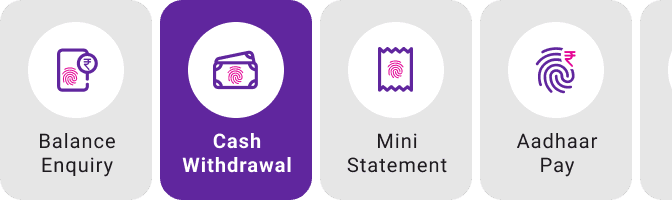
Persistent fields across tab switches - Aadhaar number, mobile number, device selection and bank selection are all customer-level inputs, they don't change between services in a single session. Persisting them across tabs eliminated the single biggest source of repeated work observed during shadowing. Only contextual fields like the amount input appear and disappear based on the selected service.
Persistent fields across tab switches - Aadhaar number, mobile number, device selection and bank selection are all customer-level inputs, they don't change between services in a single session. Persisting them across tabs eliminated the single biggest source of repeated work observed during shadowing. Only contextual fields like the amount input appear and disappear based on the selected service.
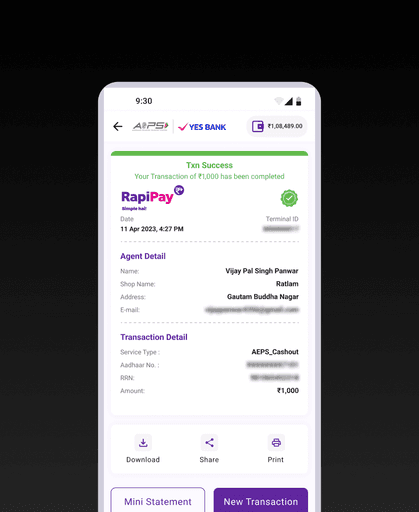
Wallet balance visible upfront - In AEPS withdrawals, funds move from the customer’s bank account to the agent’s wallet, after which cash is handed over. This wallet also powers other services like bill payments and transfers. Surfacing the balance upfront helps agent verify available funds before starting a transaction.
Wallet balance visible upfront - In AEPS withdrawals, funds move from the customer’s bank account to the agent’s wallet, after which cash is handed over. This wallet also powers other services like bill payments and transfers. Surfacing the balance upfront helps agent verify available funds before starting a transaction.

Iterations & Trade-offs
Shaping the experience through iterative exploration
Shaping the experience through iterative exploration
Iteration 1 - Text-only tabs with underline highlight
My first attempt used tabs with just text labels and an underline as the active indicator, a common pattern. The issue was scanability under pressure. Agents switching between services quickly couldn't orient themselves fast enough with text alone. Adding icons to the tabs alongside the labels made the active state immediately obvious at a glance.
My first attempt used tabs with just text labels and an underline as the active indicator, a common pattern. The issue was scanability under pressure. Agents switching between services quickly couldn't orient themselves fast enough with text alone. Adding icons to the tabs alongside the labels made the active state immediately obvious at a glance.
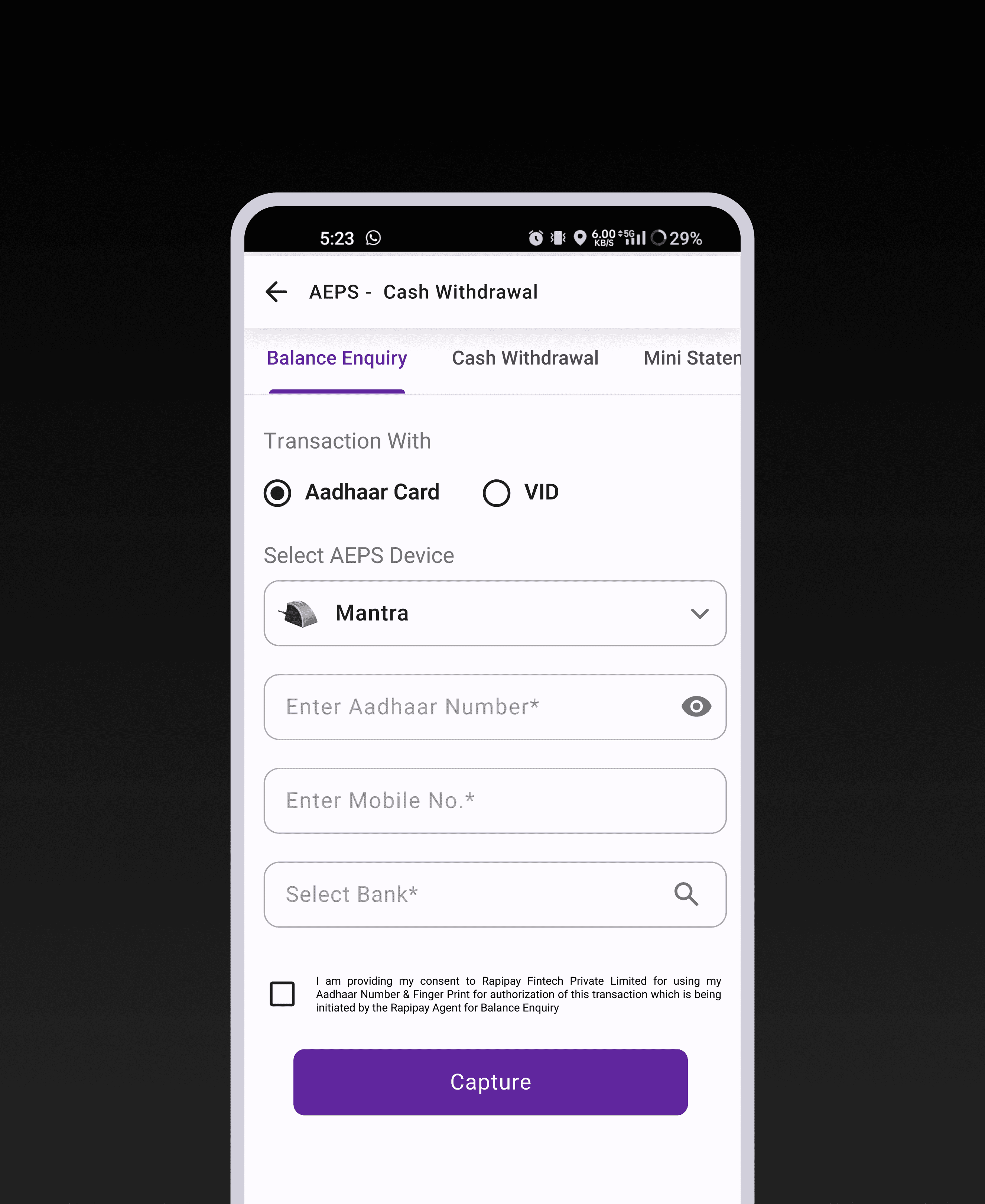
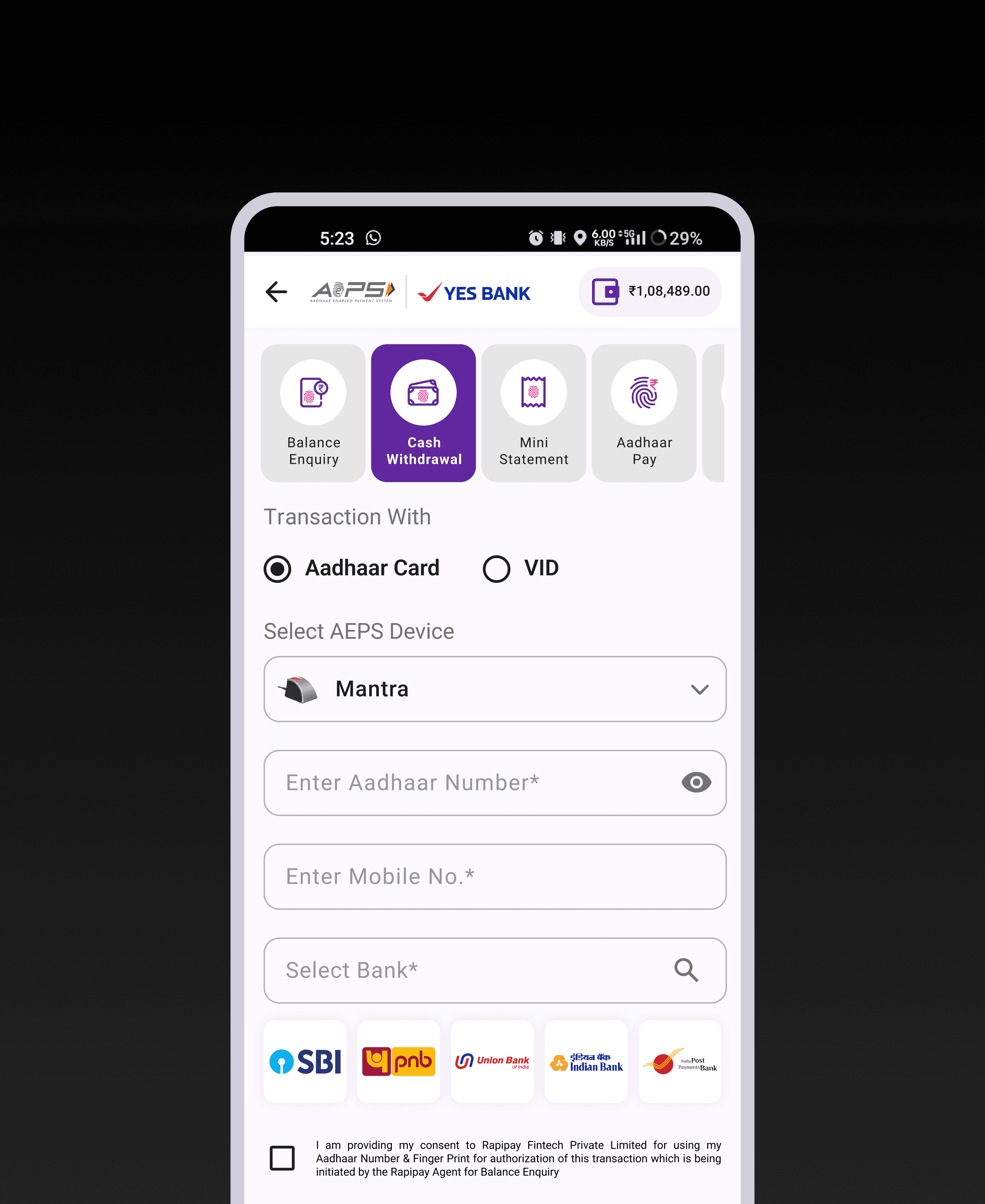
Iteration 2 - Explored logo-based bank selection for faster scanning
Rejected due to compliance restrictions around displaying partner bank logos without clearance. Moved to a searchable text dropdown, while separately introducing the YES Bank logo in the header as a compliance-approved trust signal.
Rejected due to compliance restrictions around displaying partner bank logos without clearance. Moved to a searchable text dropdown, while separately introducing the YES Bank logo in the header as a compliance-approved trust signal.
Validation
How we tested before rollout
How we tested before rollout
Rather than going straight to production, the redesign went through three rounds of validation:
Rather than going straight to production, the redesign went through three rounds of validation:
Internal Review
Design reviewed with the PM and internal team for alignment on flows, edge cases, and compliance requirements.
Design reviewed with the PM and internal team for alignment on flows, edge cases, and compliance requirements.
Sales team feedback
The sales team, who work directly with agents daily, reviewed the design and flagged the trust and compliance gap that led to adding partner bank logos.
The sales team, who work directly with agents daily, reviewed the design and flagged the trust and compliance gap that led to adding partner bank logos.
APK beta with agents
A beta APK was shared via the sales team to install on select agent devices. Positive feedback from this pilot was the green light for full rollout.
The beta pilot was particularly valuable, as it surfaced real usage patterns that internal review couldn't replicate, and gave the team confidence before committing to a full production release.
The beta pilot was particularly valuable, as it surfaced real usage patterns that internal review couldn't replicate, and gave the team confidence before committing to a full production release.
Impact
Results after rollout
Results after rollout
+4%
AEPS transaction market share
AEPS transaction market share
−7%
reduction in active agent churn
reduction in active agent churn
The churn reduction was the more meaningful signal. Agents staying on the platform indicated the redesign made their daily work genuinely less stressful and not just faster on paper. For a B2B fintech product where agent retention directly drives transaction volume, reducing churn by 7% had compounding value beyond the immediate market share gain.
The churn reduction was the more meaningful signal. Agents staying on the platform indicated the redesign made their daily work genuinely less stressful and not just faster on paper. For a B2B fintech product where agent retention directly drives transaction volume, reducing churn by 7% had compounding value beyond the immediate market share gain.
Reflection
What this project taught me
What this project taught me
This project reinforced that many UX problems are actually mental model mismatches. The product was built for discoverability, while users needed speed and execution, and aligning to that changed every design decision.
The real-world usage proved more valuable than internal reviews. Observing the product in use helped validate decisions with confidence — something I now rely on across projects.
This project reinforced that many UX problems are actually mental model mismatches. The product was built for discoverability, while users needed speed and execution, and aligning to that changed every design decision.
The real-world usage proved more valuable than internal reviews. Observing the product in use helped validate decisions with confidence — something I now rely on across projects.